


The Honda Avancier has just been revealed, and it’s the first vehicle in the brand’s stable to utilize the new-generation Honda Hybrid system. Honda Hybrid replaces the e:HEV system, but apart from the switch to a simpler name for marketing purposes, this new-generation drivetrain introduces a few clever engineering tricks to further improve the internal combustion engine (ICE).
Achieving The Perfect Combustion
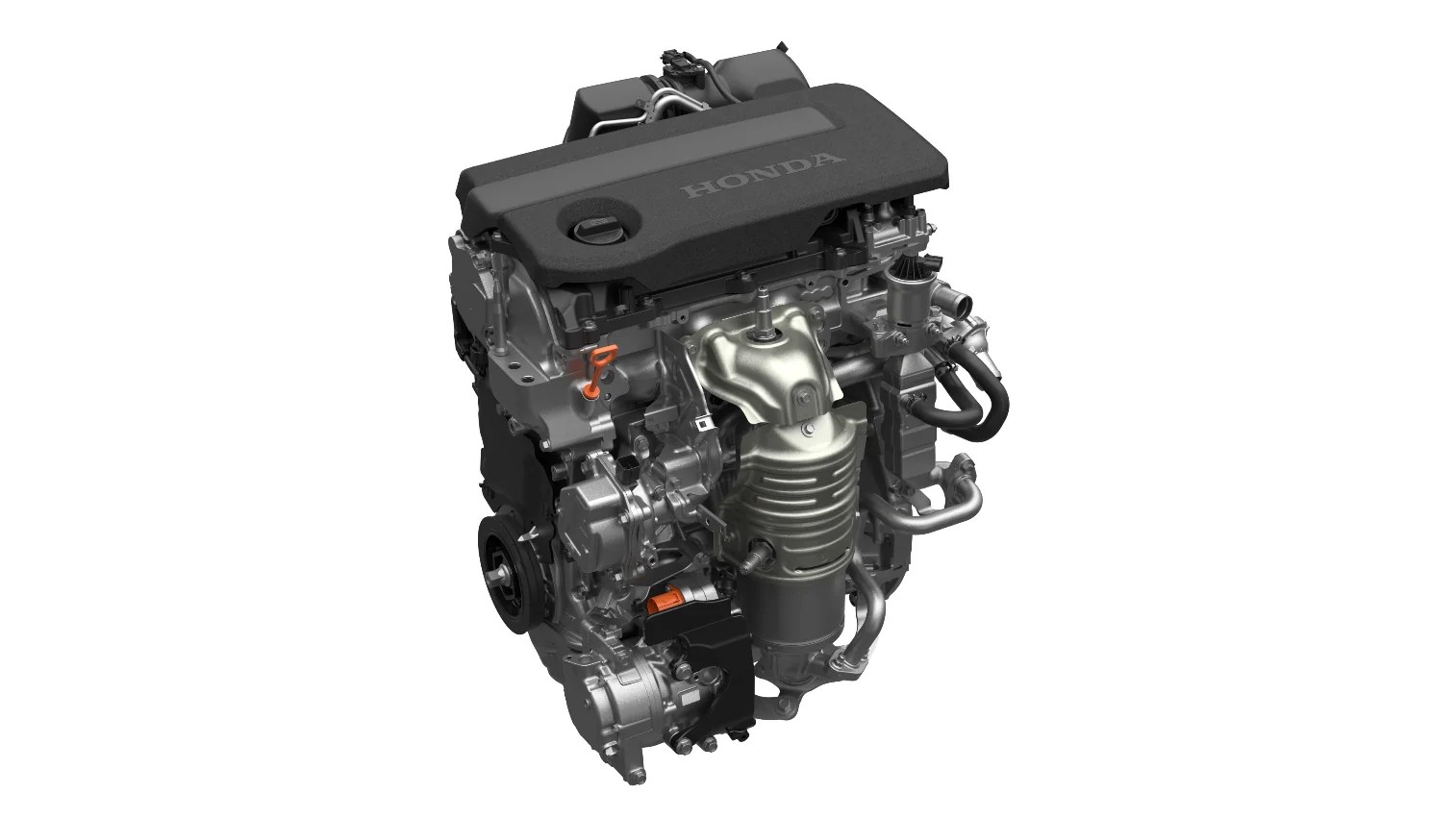
The ICE may be near its technological peak, but that doesn’t mean that there’s no more room for improvement. One of the latest buzzwords in ICE technology is what you may have heard recently as Lambda 1 (λ = 1). Lambda 1 is when a stoichiometric air-to-fuel ratio of 14.7:1 is achieved, and this ensures combustion that yields the least pollutants. Automakers who have pursued or are pursuing Lambda 1 include Porsche with its 3.6-liter electrically turbocharged boxer engine in the 911’s T-Hybrid system, as well as Mazda’s upcoming Skyactiv-Z engines.
Now, a figure of λ > 1 means a lean mixture, while a λ < 1 means a rich mixture. Most engines these days already operate in Lambda 1 conditions, but there are circumstances, such as during high-performance driving, where a rich mixture (more fuel) is introduced in order to either produce more power, eliminate engine knock, or as a means to cool the engine. Making the engine run at Lambda 1 at all times, unfortunately, reduces the engine’s power.
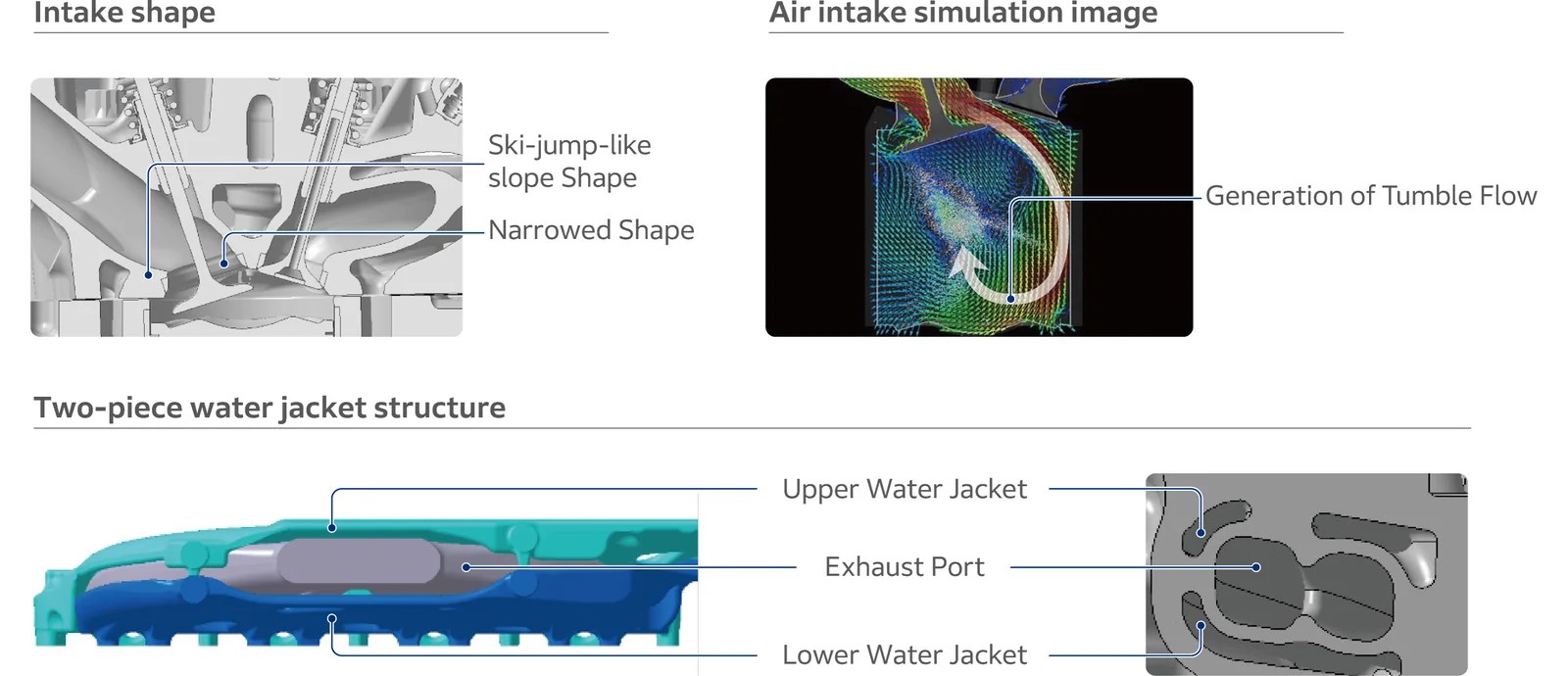
If you want to increase an engine’s output with a leaner mixture, you have to raise the compression ratio, but higher compression ratios can also result in knocking. To solve this, the engine’s straightened intake port shape has been narrowed, while a ski-jump-like slope has been introduced at the base. This speeds up the airflow velocity to generate a more powerful vertical tumble flow, which, according to Honda, completes the fuel burn before knocking can occur. The new piston crown shape also contributes to the enhanced tumble flow, while the two-piece water jacket cools both sides of the exhaust port.
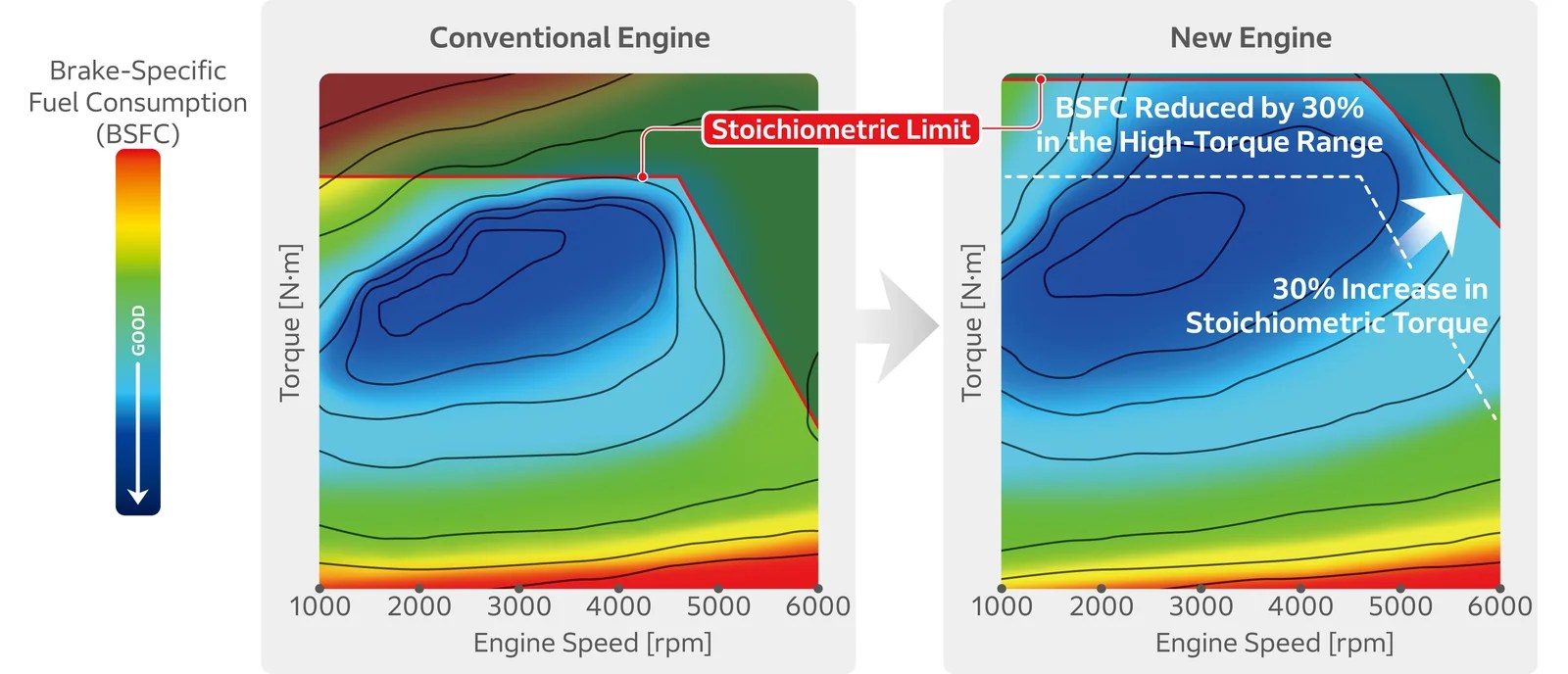
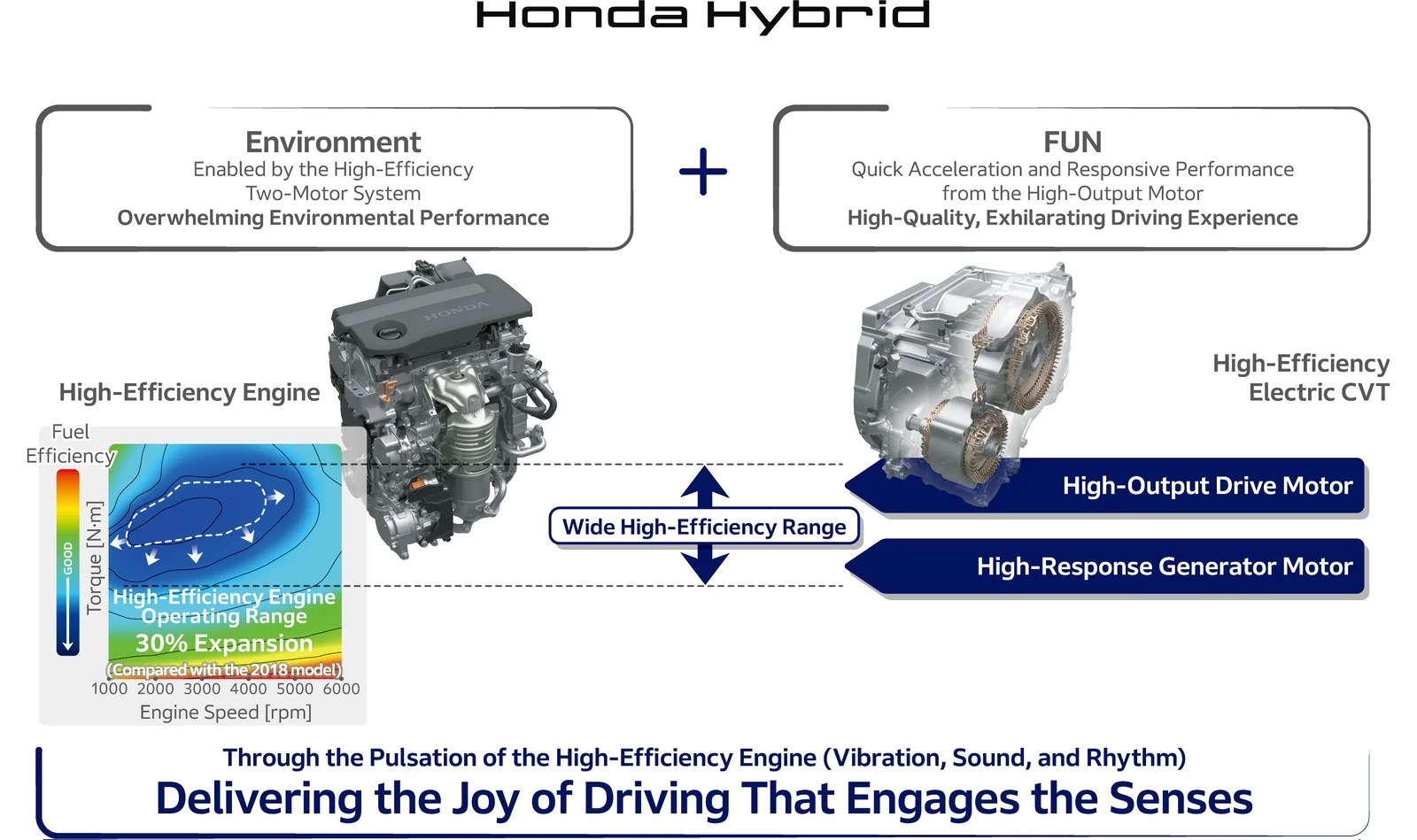
These measures have enabled the new engine to increase its stoichiometric torque limit and grow its high-efficiency zone by 30 percent, whilst fuel consumption during higher engine loads has been reduced by 30 percent.
A Lighter Engine Solely For Hybrid Use
The new 2.0-liter four-cylinder being used in the Avancier’s Honda Hybrid system is also all-new. Unlike past Honda engines, the engines for this new Honda Hybrid system will be dedicated hybrid engines. Because it has been optimized specifically for hybrids, Honda was able to reduce the cylinder block’s weight by 900 grams, while the new crankshaft is 500 grams lighter than before. Even the pistons have also been optimized for each one to be lighter as well.
Evolving The Electric Drive Unit
While the engine’s changes are quite radical, the two-motor drive unit retains the parallel-axis layout from the current Accord and CR-V e:HEV. However, Honda introduced significant weight reduction measures, whilst also reducing friction through an oil temperature warm-up management system, optimized motor lubrication, and bearing enhancements. The direct-drive gear that connects to the engine can now cruise at higher speeds than before, enhancing fuel efficiency at highway speeds.
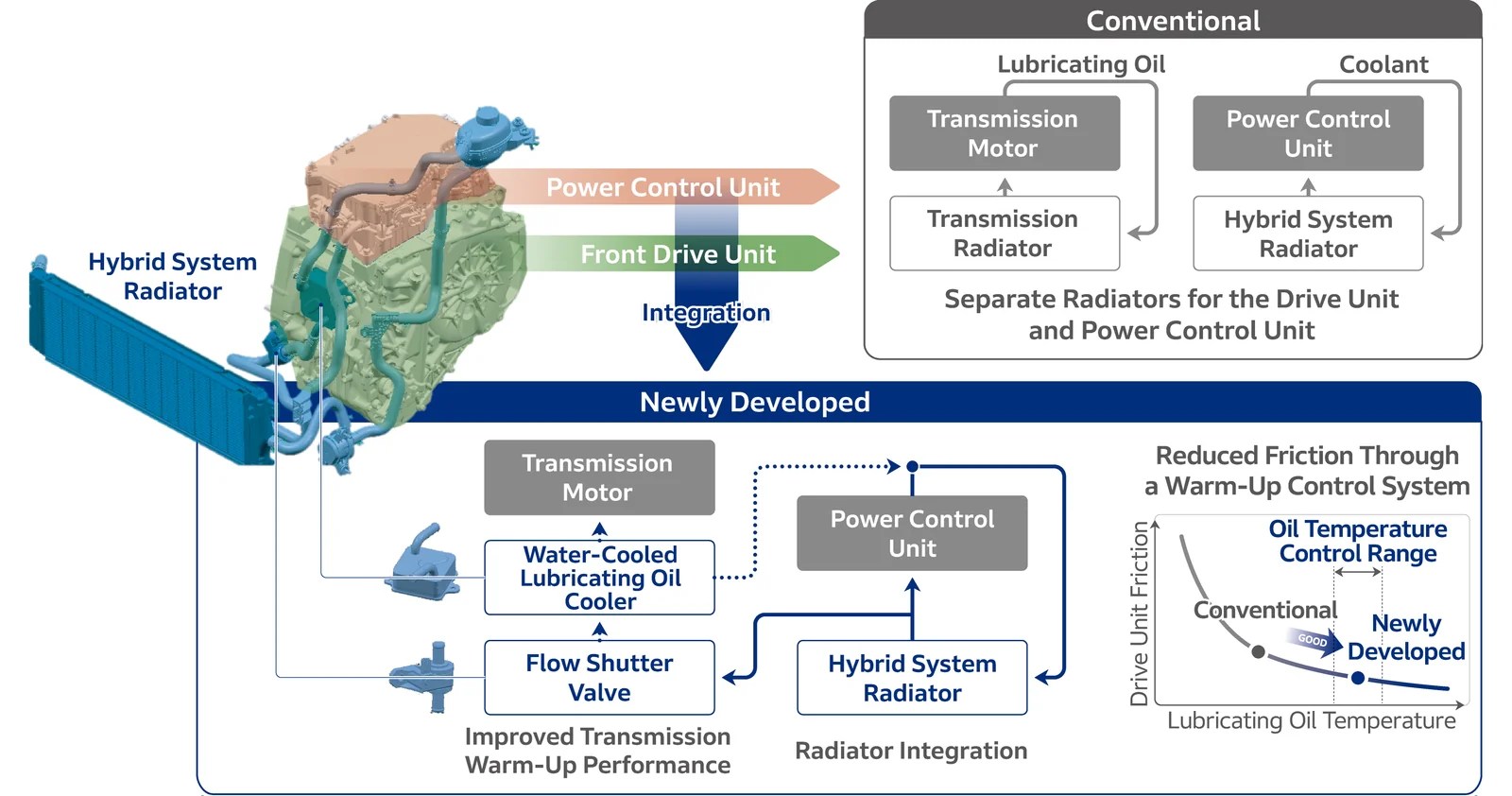
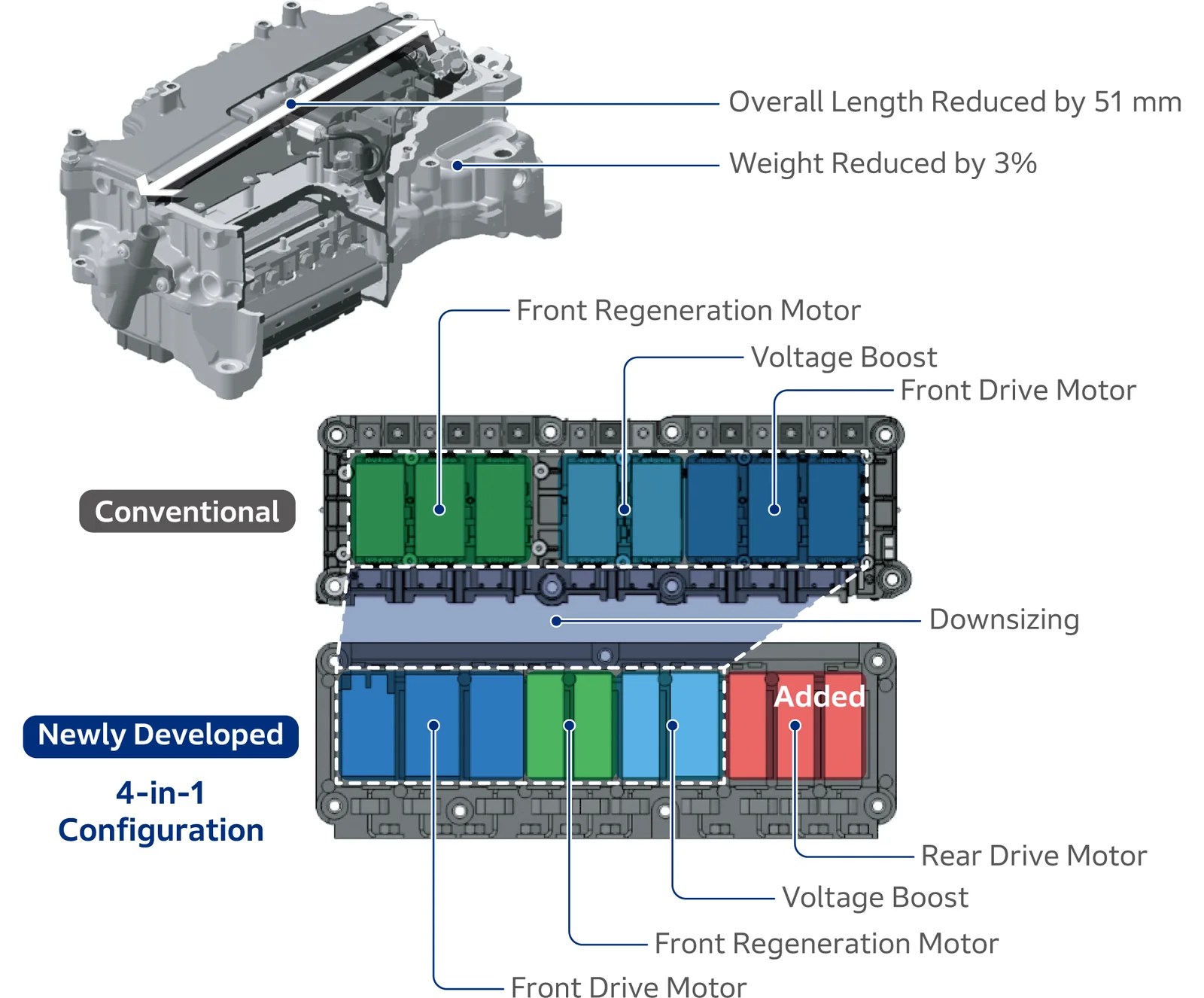
The Power Control Unit is also shorter and three percent lighter than before despite housing the inverter for the new DualPower electronic all-wheel drive (AWD) system. The cooling circuits for the front drive unit and power control unit, which are traditionally two separate components, have now been merged into a single part. A flow-shutter valve can stop the heat exchange to warm up the drive unit during cold operations.
A New Platform For Fun And Comfort

Finally, this is all underpinned by a new midsize (and eventually) compact platform that can underpin both passenger cars and SUVs. This new platform offers increased rigidity, but only in the right areas. That’s because Honda has determined that if the body is overly stiff in all areas, the reduced body deformation may result in less load on the tires, thus making it more difficult to wring out a vehicle’s performance potential.
This is why Honda has decided to identify the optimal locations in the vehicle’s structure to increase or suppress body rigidity, with the goal of generating more tire contact load through body deformation. This also prevents the weight gain that usually occurs when an automaker increases body rigidity by increasing body panel thickness or adding reinforced joints.
0 comments on “Understanding The Clever Engineering Behind Honda Hybrid”